
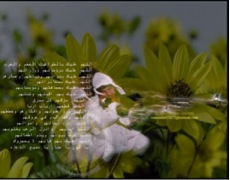
The image is dominated by the fifteen slogans that appear alongside the (double) figure clad in white — all are directed against the “tyrants” (tawaghit). This term is typically used by jihadists to describe dictators in the Arab World. 1) “Allahumma ‘alayka bil-tawaghit al-‘ajam wal-‘arab” (“O God, take those tyrants, Arabs and non-Arabs!”); 2) “Allahumma, ‘alayka bi-ru’asa’ihim wa-wuzara’ihim” (“O God, take their leaders and ministers!”); 3) “Allahumma, ‘alayka bi-nuwwabihim wa-dhubbatihim wa-‘askarihim” (“O God, take their representatives, officers and military!”); 4) “Allahumma, ‘alayka bi-mukhabaratihim” (“O God, take their intelligence agencies!”); 5) “Allahumma, ‘alayka bi-sahafatihim wa-mu’assasatihim” (“O God, take their press and institutions!”); 6) “Allahumma, ‘alayka bi-him, uqtulhum, shattithum” (“O God, get them, kill them, scatter them!”); 7) “Allahumma mazziqhum kulla mumazzaqin” (“O God, tear them asunder!”); 8) “Allahumma qatti‘hum irban[b] irban” (“O God, dismember them into small pieces!”); 9) “Allahumma, sharrid ‘uqulahum wa-afkarahum wa-khitattahum” (“O God, scare away their minds, thoughts and plans!”); 10) “Allahumma, waqqif al-dam fi ‘uruqihim” (“O God, halt their blood in their arteries!”); 11) “Allahumma, sharrid nisa’ahum wa-amwalahum” (“O God, scatter their women and wealth!”); 12) “Allahumma, ‘adhdhibhum wa-anzil al-ra‘ba bi-qulubihim” (“O God, torment them and smite their hearts with fear!”); 13) “Allahumma kharrib buyutahum wa-yattim atfalahum” (“O God, destroy their homes and orphan their children!”); 14) “Allahumma, ‘alayka bi-him, fa-innahum la ya‘jizuuka” (“O God, have at them, for they are powerless against you!”); and 15) “Ya qawiyy, ya jabbar, ya sami‘ al-du’a’” (“O Almighty, O Powerful One, O Hearer of prayers”).
The figure in the image is portrayed as though he is in the heat of battle, aiming at a target. The slogans are short prayers, cries meant to inspire and to prepare a person for the moment of contact with the enemy. With each slogan, there is less expression of political anger and more lashing out in personal rage, calling on God not merely to target the enemy’s political and military leaders, but also its people, its home-front and its women and children.
Notably, the text of the slogans is set against the pastoral view of yellow flowers. In this image, the figure of the warrior (mujahid) has passed on from this world, and no longer needs to pine away for the divine. In this way, the designer of the image hopes to evoke sentiments of happiness for the deceased. At the same time, the pain of separation and mourning by those who remain alive is expressed. Finally, the figure’s death and perceived martyrdom status is signaled by the shroud-like, white clothes.
